Java and Data Structures: Write Efficient Code
A Java Full Stack Developer is skilled in both front-end and back-end development, working with tools like Java, Spring Boot, Angular, React, and databases. This role involves creating dynamic web applications, integrating APIs, and ensuring seamless user experiences. Proficiency in these technologies allows developers to handle complete project lifecycles, making them highly sought after in the tech industry. Start your journey with expert-led training today!
Introduction
Java is one of the most powerful programming languages, widely used for building scalable applications. One of the key strengths of Java is its seamless integration with data structures, allowing developers to write optimized code for performance and efficiency. Mastering data structures in Java is essential for anyone looking to enhance problem-solving skills and develop robust applications. Whether you are a beginner or an experienced developer, enrolling in a Java Course Online can help you gain expertise in using Java with data structures effectively.
Why Data Structures Matter in Java
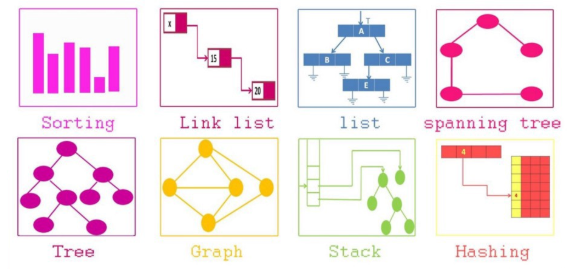
Data structures are the backbone of efficient programming. They help in organizing and managing data to perform operations like searching, sorting, and indexing effectively. Choosing the right data structure can significantly impact the execution time and memory usage of a program.
Data Structure | Usage | Time Complexity |
Array | Sequential storage, fast lookup | O(1) for access, O(n) for search |
Linked List | Dynamic size, efficient insert/delete | O(n) for search, O(1) for insert/delete |
Stack | Last-in, first-out (LIFO) operations | O(1) for push/pop |
Queue | First-in, first-out (FIFO) operations | O(1) for enqueue/dequeue |
HashMap | Key-value storage, fast lookup | O(1) average case |
Tree (BST) | Hierarchical data management | O(log n) for search, insert |
Graph | Representing networks, pathfinding | O(V+E) (BFS/DFS) |
Performance Comparison: Array vs Linked List
The choice between arrays and linked lists depends on the required operations. Arrays offer fast access times, while linked lists provide efficient insertions and deletions.
Time Complexity Comparison
Operation | Array | Linked List |
Access Element | O(1) | O(n) |
Insert at Start | O(n) | O(1) |
Delete at Start | O(n) | O(1) |
Insert at End | O(1) | O(1) |
Delete at End | O(1) | O(n) |
Graph Representation in Java
Graphs are widely used in applications like social networks, web crawlers, and navigation systems. They can be represented in Java using an adjacency matrix or adjacency list.
Adjacency Matrix Implementation
int[][] graph = new int[4][4];
graph[0][1] = 1;
graph[1][2] = 1;
graph[2][3] = 1;
Adjacency List Implementation
import java.util.*;
class Graph {
private Map<Integer, List<Integer>> adjList = new HashMap<>();
void addEdge(int u, int v) {
adjList.computeIfAbsent(u, k -> new ArrayList<>()).add(v);
}
}
Noida: A Thriving Hub for IT Education
Noida has emerged as a major IT and education hub, attracting developers and professionals seeking career growth. With the presence of top tech companies and IT parks, the city offers excellent opportunities for learning and employment.
Java Training in Noida provides hands-on experience with core and advanced Java concepts, including data structures, algorithms, and full-stack development. The city’s training institutes focus on industry-oriented learning, making Noida an ideal place to gain practical coding skills.
With Java Full Stack Training in Noida, students can master front-end and back-end technologies, including Java, Spring Boot, Hibernate, and database management, ensuring they are industry-ready.
Sorting Algorithms in Java
Sorting is an essential operation in computing, and Java offers various sorting algorithms like Merge Sort, Quick Sort, and Bubble Sort.
Sorting Algorithm Comparison
Algorithm | Best Case | Worst Case | Space Complexity |
Bubble Sort | O(n) | O(n²) | O(1) |
Quick Sort | O(n log n) | O(n²) | O(log n) |
Merge Sort | O(n log n) | O(n log n) | O(n) |
Sorting is an integral part of software development and is extensively covered in Java Full Stack Course Online, ensuring better algorithmic problem-solving skills.
HashMap vs TreeMap: Choosing the Right Data Structure
Java provides HashMap and TreeMap for key-value storage, but they have different performance characteristics.
Comparison of HashMap and TreeMap
Feature | HashMap | TreeMap |
Storage Type | Unordered | Sorted |
Search Time | O(1) | O(log n) |
Insertion Time | O(1) | O(log n) |
Use Case | Fast retrieval | Ordered data |
Choosing between HashMap and TreeMap is a critical skill taught in the Java Course in Gurgaon, where developers learn to implement efficient data structures for optimized performance.
Data Structures Performance Analysis
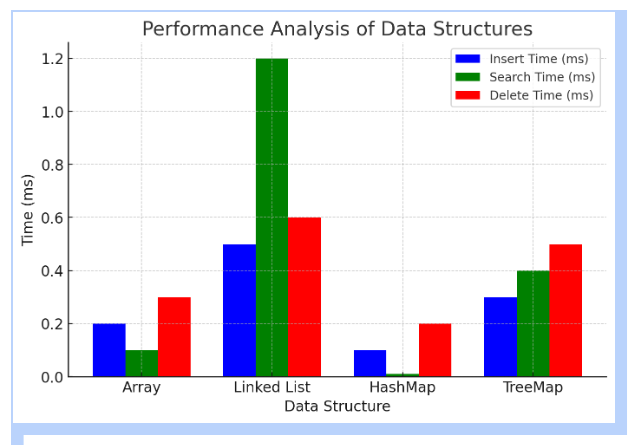
The efficiency of data structures depends on operations like insertion, deletion, and search.
Conclusion
Java and data structures play a crucial role in software development, allowing for efficient data management and optimized program execution. Choosing the right data structure impacts performance, memory usage, and application scalability. By mastering these concepts, developers can build high-performance software solutions. Java provides built-in libraries and tools that make working with data structures more manageable. Understanding and implementing them effectively ensures faster algorithms and improved application performance.


